🍰 Creamy Vegan Cheesecake: The Ultimate Dairy-Free Indulgence
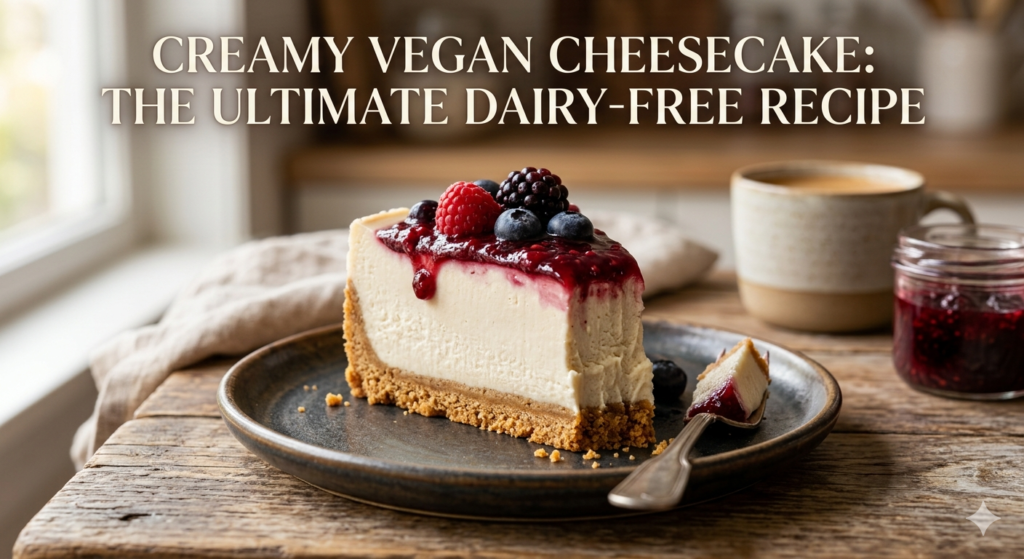
Let’s be honest: when you first tell someone you’re making a “vegan cheesecake,” the reaction is often skepticism. We’ve all encountered dairy-free desserts that were either chalky, excessively coconutty, or crumbling under a dense, heavy crust. The dream of a truly luxurious, silky-smooth cheesecake without cream cheese or sour cream can feel impossible to achieve.
In this guide, you’ll learn the exact techniques needed to create a mind-blowingly creamy Vegan Cheesecake that mimics the classic original down to the Tangy bite. We’ll cover the importance of the base blend, the secret to natural thickeners, and how to balance flavors so that nobody suspects it’s made entirely of plants.
The Key to Texture: The Cashew Cream Base
The single most important element in achieving that authentic “cheesecake” mouthfeel is your fat source. We are not using tofu or processed vegan “cream cheese” alone. The absolute best base for structural, velvety creaminess is soaked raw cashews.
Soaking cashews softens them, allowing them to blend into an incredibly smooth, neutral-flavored paste when mixed with liquids. This creates a luxurious emulsion that is stable enough to slice but still melts in your mouth. When combined with full-fat coconut milk or a commercial vegan cream cheese, it provides the complex mouthfeel you expect.
Key takeaway: High-quality soaked cashews provide the fat and body necessary to create a professional-grade mousse texture.
Mastering the Tanky Flavor Profile
The traditional New York cheesecake has a specific tartness that is often missing in vegan versions. Because we don’t have cultured dairy, we must introduce that “cultured” tang manually and effectively.
- Fresh Acid: Use pure lemon juice (avoid the bottled stuff!) for a bright, vibrant tang.
- Cultured Tang: A small amount of nutritional yeast adds a subtle “savory/cheesy” depth that is not overwhelming but cuts the sweetness perfectly.
- Liquid Gold: Pure Maple Syrup or agave provides the sweetness without adding grit.
Implementation Guide: Step-by-Step Perfection
Creating this cheesecake requires patience, but it is entirely achievable. This method is for a baked, set cake, providing the best structural integrity.
- Prep the Cashews: Boil raw cashews for 15 minutes or soak in room temperature water overnight. Drain and rinse.
- Make the Crust: Blitz 1.5 cups of vegan graham crackers (or an almond-oat mix) with 1/4 cup of melted vegan butter until it looks like wet sand. Press firmly into a 9-inch springform pan. Bake at 175°C (350°F) for 10 minutes.
- Blend the Filling: Combine soaked cashews, 1 cup of full-fat coconut cream, 1/2 cup of maple syrup, 1/4 cup of lemon juice, 2 tbsp cornstarch, and 1 tsp of vanilla in a high-speed blender. Blend until entirely silky. Zero graininess should remain.
- Assemble and Bake: Pour the filling over the cooled crust. Smooth the top. Wrap the pan tightly in foil and bake in a water bath (bain-marie) at 160°C (325°F) for 60 minutes.
- Slow Cool: Turn the oven off, open the door slightly, and let the cake sit for 30 minutes. Then, let it cool completely on the counter before chilling it in the fridge for at least 6–8 hours.
Common Mistakes to Avoid
The two most frequent errors are rushing the cooling process and skipping the water bath. A gradual cool is essential to prevent cracking on the surface. If you chill the hot cake immediately, the sudden temperature change will cause it to shrink and fracture.
The water bath ensures an even, steamy bake, which is critical for cashews. Without it, the edges will brown too fast and become rubbery while the center remains undercooked.
Pro tip: For the best possible flavor and texture, use “raw” cashews, not roasted. Roasted cashews will add a strong nutty, toasted flavor that clashes with the tangy, sweet profile of the cheesecake.
Best Practices for Serving and Variations
A baked cheesecake is a blank canvas. While divine on its own, try level up your presentation:
- Fruit Compote: Sauté mixed berries or cherries with a little maple syrup and a cornstarch slurry.
- Caramel Drizzle: Make a quick vegan caramel using coconut sugar and full-fat coconut milk.
- Chocolate Ganache: Melt 70% dark chocolate with a touch of coconut oil and pour it over the cooled cake.
Conclusion
This Creamy Vegan Cheesecake proves that indulgence does not require sacrifice. By understanding the interaction between soaked cashews, acidic balancers, and a slow-cool technique, you can create a dessert that will please vegans and skeptics alike. It is rich, elegant, and entirely satisfying.
Ready to see how creamy a plant-based dessert can be? Grab your blender and experience the magic for yourself!
3. SUPPORTING ELEMENTS
FAQ
Q: My crust is too crumbly! What happened? A: You likely didn’t use enough melted butter or didn’t press the crust firmly enough. The mix should stick together when squeezed in your hand.
Q: Why is my cheesecake cracked on top? A: This is usually due to the cake cooling too quickly, a oven temperature that was too high, or skipping the water bath. Ensure you let it cool slowly in the turned-off oven.
Q: Can I use tofu instead of cashews? A: Technically, yes, but the texture will be significantly softer and less “buttery” than the cashew-based version.
Creamy, tangy, and absolutely delicious. This cashew-based cheesecake will fool any dairy lover.